
Why an extraction may be discussed
- Extensive decay or fracture.
- Advanced infection or loss of support.
- Selected wisdom-tooth concerns.
- Orthodontic or other treatment-planning reasons.
Assessment and imaging
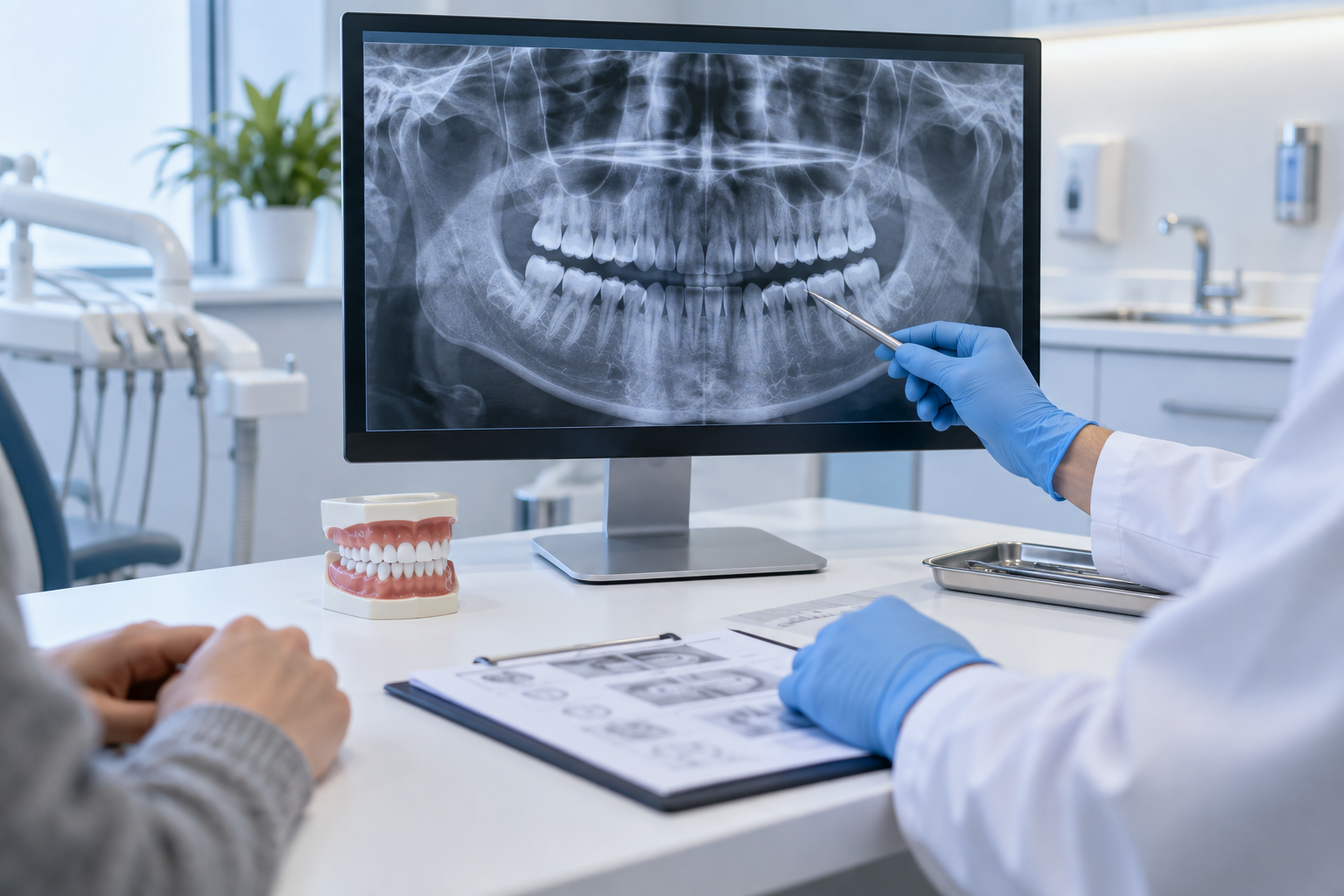
The dentist examines the tooth and surrounding tissues. An X-ray may be required to assess roots, bone and nearby structures before discussing a routine extraction, minor oral surgery or referral.
Aftercare
Written and verbal instructions may cover bleeding control, food, cleaning, medicines and warning signs. Follow the instructions provided for your individual case.
Planning your appointment
Tell the clinic your main concern, any previous treatment and your preferred day or time. Ask about the assessment fee, available appointments and what any proposed treatment quote includes.
Related care and visit information
Frequently asked questions
Will every wisdom tooth need removal?
No. Removal depends on symptoms, disease risk, position and other clinical factors.
When should I seek urgent help after treatment?
Follow the clinic's instructions and contact them about unexpected or worsening symptoms. Seek emergency medical care for difficulty breathing or another medical emergency.